

Music Video Theory
- milesstewart
- Oct 12, 2020
- 14 min read
Updated: Nov 24, 2020
The first essay for the year is a research essay about music videos. We will be researching historical content, types and techniques all used in music videos.
Types of music videos;
-Performative- Oldest and most common form of music videos.Largely focus on the performance of the artist, such as the artist singing at concerts or at a location. This video shows off the artist, sometimes also shows off the connection the artist has with their fans.
-Narrative- Using the music video to tell a story. Often narrative music videos are similar to a short film, containing a beginning, middle and end. Narrative music videos can give deeper meanings to lyrics and songs, or can be used to paint a picture of what the song means, or an alternative story.
-Conceptual- This music video type has the largest range of creativity. These music videos are artistic impressions of a song, either from the artists or the directors perspective. Usually conceptual music videos create a mood. There are no rules for conceptual music videos.

History of music videos;
- First instance of a music video occurred in 1894, when George Thomas, an electrician was hired to synchronize a live performance with a magic lantern to show projected images.
- The first instance of a synced video of a performer singing was 'The Jazz Singer' that came out in 1927. Before this the only way to see artists was at a live concert or pictures.
-In 1965, 'We can work it out' by The Beatles is considered to be the first ever music video broadcast-ed on TV.
-1966, 'Paperback Writer' by The Beatles was the first Performative music video and in the same year, 'Subterranean Homesick Blues' by Bob Dylan is the first instance of a lyric video.
-1967, Peter Goldman, a movie director, started to get into music videos, and experiment with Avant Garde techniques, exploring narrative concepts in music videos. Examples include 'Strawberry Fields Forever' by The Beatles and many of David Bowie's music videos.
-In 2009, 'Bohemian Rhapsody' is widely credited as the first global hit single for which an accompanying video was central to it marketing strategy.

Andrew Goodwin's 7 techniques of music videos;
1.) Genre characteristics, Different music genres have stereotypical characteristics, i.e- rock music = black clothing, spikes, black and white visuals, and rap music= streets, jewelry, expensive cars.
2.) There is a relationship between lyrics and visuals. They can be directly linked, with the visuals showcasing the literal meaning of the song, to present the thoughts of the artist to the viewer. Or, the visuals can develop extended elements, such as hidden moods or atmospheres.
3.) There is a relationship between music and visuals. The genre of music affects the music video, such as the pace, editing and contents of the music video. If the song is happy, the locations and lighting will be bright, there will be a jolly and perhaps fast pace to the music video, as well as the editing having fast, smooth transitions to replicate things going smoothly in the music video. Whereas if it is a sad song, the music video will have little lighting, in gloomy locations, with slow editing and block transitions.
4.) Demands of the record label will include the need for close ups. Some stars have a contract with record labels, where in music videos, they require a certain amount of close up time. This creates intimacy between star and audience and improves recognition, leading to better popularity and then higher sales.
5.) Artists may develop iconography that recurs across their work. Similar to close ups, some bands have a recurring action across all songs and videos, for continuity and recognition.This could include phrases or characters. I.e- DJ Khaled shouting 'another one' in songs.
6.) There is frequent reference to voyeuristic treatment of the female body. Love is a huge component of a lot of songs, meaning good looking men and women are in music videos. Female body is often shot up close, with minimal clothing to appeal to fans, for repeatability, creating intimacy between artist and fans, also increases sales and marketability.
7.) There are often inter-textual references (Easter eggs) put into music videos. This could include references from the band or their other songs, or movie references. This increases hype around the music video, and more people share it.

Representation;
Representation in music videos have evolved through time, but there are still general stereotypes of representation of people in music videos. To start with, women are represented in a different way to men. They are often sexualised through wearing limited clothing, as well as close up shots of the artist or women in the music videos. This is to appeal to the audience, for re-play-ability, and so people share the video around. This has changed slightly with time, but is still the general method that women are represented in music videos. Men on the other hand are represented as powerful and dominant beings, often being rich and friendly. This is to make men aspire to be like these artists, and make them seem desirable to women. Until recently, LGBT+ relationships were never seen in music videos, and still to this day, they are not incredibly common. In love music videos, or pop music videos where there is some form of relationship, it is often heterosexual, containing a man and a women. This is to relate to heterosexuals, as that is the large-scale audience, but as LGBT+ is now massively accepted in society, some music videos contain gay couple, as well as contain cast members within the LGBT+ spectrum. Music videos still lead towards hetero sexual relationships to appeal to the wider audience, but with more LGBT+ artists up and coming, this could change in many music videos. Ethnicity is represented in music videos, more so depending on the genre of music. Music videos haven’t been around for that long, around 60 years, so in the time music videos have been around, everyone in society is supposed to have equality, and so ethnicity is viewed the same in music videos, but for country music, the music videos contain more white people, whereas rap and grime music videos contain more black people, this is due to the artists who sing these genres of songs, as well as the audience for these songs.

Target Audiences;
Depending on the genre of music and the demographic the music video is aimed at, can change how the music video is created. If the music video is for children or children under the age of 18, there will be nothing sexual about the music video, and the music video is likely to be happy and colourful, using locations such as fields, beaches, parks as they are all locations stereotyped with happiness. There will also likely be lots of dancing and influencers and famous people might star in the music video, as children look up to famous people. For a pop song, for an all-female group, the music video is likely to include beautiful women, and stunning costumes, to appeal to females, to aspire to look like the artists, and the video will include close ups of the women, wearing skimpy clothing, to appeal to males. The video will likely have fast paced editing and could include a heterosexual relationship in it. For genres such as classical or older artists, the music video is likely to be performative, for older target audiences to follow, with slow paced edits and natural colours.

Codes and Conventions in Music Videos;
Codes and Conventions of music videos are the different techniques that can be used to construct the music video, as well as creating the meaning behind the video. There are two types of techniques being Technical and Symbolic;
Technical Conventions;
-The way that camera angles are used. Such as Eye-level shots, being the most common view, as it is how the audience also sees the world. These shots are for realism, how the audience would view the situation. High angle shots can be used to make the target look small and powerless or less significant. Low angle shots can be used to give the impression of dominance or power. Bird’s eye view and slanted angles can give dramatic effect and show the world from different perspectives, perhaps showing the audience stuff that the characters in the music video can’t see.
-Types of shots. Music videos use huge ranges of shots to give off different views and emotions. Long shots emphasize the location around the target, but also gives off lots of vision for the audience. Wide shots show the artist mostly, but also the location is still relatively important. Mid shots show the artist or performer, and they are the focus of the shot. Different ranges of close-ups show off the artist, from different views and distances to focus on different parts of the artist. Often close ups are used when the artist is shown singing. Over the shoulder shot can show off what the character is looking at, so the audience can see things from the characters perspective.
-Sound can be used in two types in music videos. Diegetic Sound which is sounds that are expected, such as in a music video, if it shows a phone ringing, there would be the sound of a phone ringing. Diegetic sounds range from characters voices to objects making sounds. Non- diegetic sounds are edited in sounds in post production. The sounds don’t originate from the contents of the music video, such as music overlay, narration and extra music effects. In a music video, the music itself can be diegetic or non-diegetic. In performative music videos, the music is normally diegetic, because the artist can hear it, and lip syncs it in the video. In a narrative music video, the music overlay is normally non-diegetic, because the characters can’t hear the music, the music is an overlay.
-Editing Techniques. Editing can be used to completely dictate how a music video feels. Editing can make the music video speedup/slow down, make the mood happy, or sad. Editing in music video mostly consists of syncing the audio with the video, cutting down clips, and adding effects and colourizing the video. Main editing types in music videos consist of Jump cutting, of which is adding close up shots in between long shots or artistic shots, to transition through the video, to give off an artistic impression. Sound editing can be used to edit the video in time with the audio, such as cutting between videos at beat drops or certain rhythms. Colourizing/stylizing the video to the music genre type can be done through editing as well. Altering the colour of the video through LUTS or effects can hugely change the mood of the video. Quick edits can be done for action packed music videos or rap videos for instance, whereas long clips of videos and slow editing can be used for sad songs or country music for instance.
Symbolic Conventions;
These types of conventions are ways of showing deeper meanings to the music videos and characters in them, using techniques such as;
-Facial expressions, gestures and poses all can be used to give off specific feelings and emotions in music videos. The emotions can portray what the lyrics mean, or can be used to create deeper meanings behind the lyrics. These effects show the audience how the characters are feeling, which gives more information about the type of music video it is, and in result, how the songs makes the audience feel.
-Mis En Scene is the setting of a music video, such as lighting, props, costume, location and colours. Depending on the music video style and genre, the Mis en Scene can change hugely, as all of these elements, when changed, can completely change the look, style and genre of the music video.
-Lighting, can be changed to determine how the scene and location is lit, using natural and artificial lighting. The lights on the scene can determine the mood, such as lots of lights signals happy moods, whereas limited lighting could portray sadness.
-Props, can be used to determine the genre of the music video, and also enhance the scene of a music video. For example, in a rap music video, the props could consist of jewelry, cars, money and alcohol. Another example could be using props in the music video that showcases the band, such as merchandise.
-Costumes, using clothing that stereotypes genres, such as for country music, wearing jeans, flannel shirts, boots and a cowboy hat, or wearing black and white clothing for a sad song. This can create a mood without even hearing the song, or if there is no location. Same goes for hair and makeup.
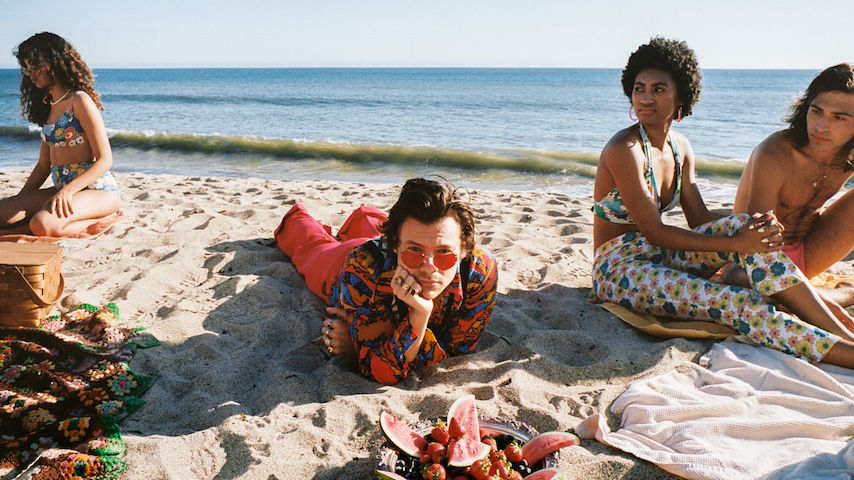
-Location, is of massive importance for the Mis En Scene. The location can directly refer to the genre or style of the music video, such as a barn for a country music video, a concert for a performative music video, streets for a rap video, and a beach for a happy song. Location is very important in music videos, because as well as the genre and type of music video the location is being used for, you also have to think about how to light it, how cameras can be used at the location, and what the characters will do at the location.
-Colour, using specific colours to represent a mood, i.e- love is pink, danger is red, yellow is calm, orange is happy, blue is sad etc. Colouring sets using LUTS can also give off the film a completely different vibe or style, such as putting the cyan/orange LUT over footage makes it seem happy and modern, whereas putting over a grey scale LUT can make the footage feel old or sad.

Breaking down Music Videos;
I will be breaking down 2 music videos, and explaining some of the choices they would have made in the creation and setting up for the video, as well as some insight into why certain aspects of the music video have been done in the way they are.
The first music video I will be analysing is ‘Always, I’ll Care’ by Jeremy Zucker. The song is about caring for one another, and about being there for others in need. It is a pop song with a slow tempo, which is reflected in a lot of the shots and techniques used in the video. For instance, almost every other shot has been shot using over cranking, or reverb has been put in place to make it look slowed down. This slowed down effects gives off a chilled atmosphere, and makes the audience calm. It also makes the music video feel like it is in the present and you are there in the scene. Combined with the slowed down shots, the music video is shot on a beach, on a sunny day. This goes perfectly with the happy/calm genre of song, as beaches are happy places, and the fact it is sunny tells the audience it is a happy song. Because it is sunny, the natural lighting is very good, making the shots feel crisp and clear, combined with the slight use of a teal/orange LUT, the footage looks new and smooth, all combining really well with the slowed down footage to give off a calm and happy vibe. There is great use of Mis En Scene in many ways. First of all, the props in the music video include a rabbit, cute and dainty jewelry as well as colourful and simple clothing. The rabbit symbolizes calmness, and is simply present in the music video to show that the video is about being happy and calm. The dainty jewelry and simple colourful clothing also show that there isn’t much to unfold from the music video, only happiness and friendship, of which the jewelry represents. The facial expressions are all smiles and laughing, as well as plain expressions looking at the camera. Again, it is to reflect the mood of happiness on the music video. There is a lot of close up shots of hugging and laughing of good looking teenagers, as well as the artist, to build recognition, as well as to imply friendship. There are also a lot of mid shots and wide shots. The mid shots are to show the artist singing, and there are a lot of wide shots, to showcase the location, of the beach, as it is an important aspect of the music video. The music video is a performative and a conceptual music video. There is no narration to it so it can’t be a narrative video, but there are shots of the artist singing, as well as the music video creating moods, so it is conceptual.

The next music video I will break down is ‘White Lie’ by Contradash. The song is about telling lies in a relationship. It is a techno pop song, with auto tune used for a different style of song. It is a fast paced song, which makes you bouncy and energetic. This is largely reflected in the editing style, of which uses a lot of fast paced cuts between shots, as well as sped up clips and a large amount of different locations, shot types and colours. The footage is cut between each other quite frequently, with shots probably averaging at around 2 seconds of show-time, before a new clip comes up. There are a lot of visual effects added to the clips, such as LUTS, grain like overlays, making some clips look like they are from an old camera. There is use of zooms across footage, both to change location and to clip to other scenes. The fast paced editing links to the song very well, as well as the sped up footage. This is because the song is fast paced, so an all action music video fits the tempo, as well as making the audience active, and making the audience wants to move and dance. This music video is mostly performative, because in all of the clips, the artist is present singing the song. For this music video, the Mis En Scene is very different. First of all, the camera techniques are similar to the other music video in a way, but there are more creative shots used. There is use of close ups, mid shots and wide angles, but as well as these, there are extreme close ups as well as tilt shots, from beneath the artist, as well as above him. This is to give off an artistic feel, also to match the pop style of music. The editing for this video is a lot faster than the other video. These are sudden changes in clips, as well as zoom effects to give off the impression of speed. The lighting for this video is all different, due to the many different locations and styles of footage. The outside shots use natural lighting, but there are also studio shots which use artificial lighting, as well as some of the clips using silhouettes meaning they have back lighting or blown out the front of the image. The props used in this video show it is a pop song, such as guitars and drums being the main props used. The locations are all different, and there are a lot of them, such as being on a rooftop, to give off the pop star vibe, as well as an old swimming pool, a studio and a hedge. The rooftop is the cliche location for a music video, for performative videos, as no one can hear you as you are high up, so you can express yourself however you want, of which is mirrored in the music video. The studio, along with lighting shows that the artist is quirky, and links with the pop/modern aesthetic. The swimming pool and hedge are common locations to show that the artist is just like everyone else and were probably used based off of ease of access to location and aesthetic. The costumes are all modern street clothing that shows off his personality. The trendy clothes would attract teen audiences, showing the artist wears similar clothing to them. Finally, the colours used are all different, with different LUTS used, but I think that the main LUT is, again, the orange/teal LUT.

In conclusion, there are many different elements that can makes good or bad music video. First of all you have to choose what type of music video you want to create, such as Narrative, Conceptual or performance. The genre and meaning to the music video can help decide this, although a music video can hold concepts of more than one type of music video. Next up you need to create the Mis En Scene for the music video, of which also changes drastically, depending on the genre of the music video, as well as the meaning. The Mis En Scene includes location, lighting, props, costumes and colour. Getting the Mis En Scene spot on can lead to a great music video that the audience enjoys, of which could lead to replay ability as well as being trendy and shared around, advertising the song. Other factors that can lead to a great music video are following the 7 trends of Andrew Goodwin. These trends include things such as including inter-media references or ‘Easter eggs’ into music videos to please the viewers as well as to promote new audiences to share the music video around. Other trends include close ups of artists to gain recognition, or recurring themes in an artist’s music videos, again to gain recognition. You could also follow one of Roland Barthes’ 5 codes of music videos, such as putting hidden meanings into music videos, to make them more entertaining. And finally, the methods used to shoot the footage, such as camera shots is very important for music videos, using a wide range of shots such as close ups to promote the artist, wide shots to show the location to portray the genre and meaning of the music video, mixed in with artistic shots such as diagonal or mid shots. After the footage is recorded, finally, the editing style and method you use can completely change the look and feel of a music video. The editing can match the lyrics or the tempo/beat of a song by either editing fast or slow and adding transitions or zooms. Editing can also include changing the feel of the footage by adding LUTS or effects. There are so many different methods and theories you can use to create the best music video possible, but the most important thing 95% of the time is to have a good song to create the music video for. Choosing all of the correct methods and gimmicks to improve a music video can be extremely hard, so you must also factor in creativity and have a unique approach to music videos, and treat them like short movies. As long as something enjoyable has been created, and the video matches the mood and genre of the song, there is no right or wrong to creating music videos. I will be using almost every technique I have researched in this essay to improve my future music videos.
Comments