

Creating my Documentary
- milesstewart
- Mar 28, 2021
- 6 min read
The first step to creating my documentary, is to research what makes a great documentary, and what sort of content I should create the documentary on.
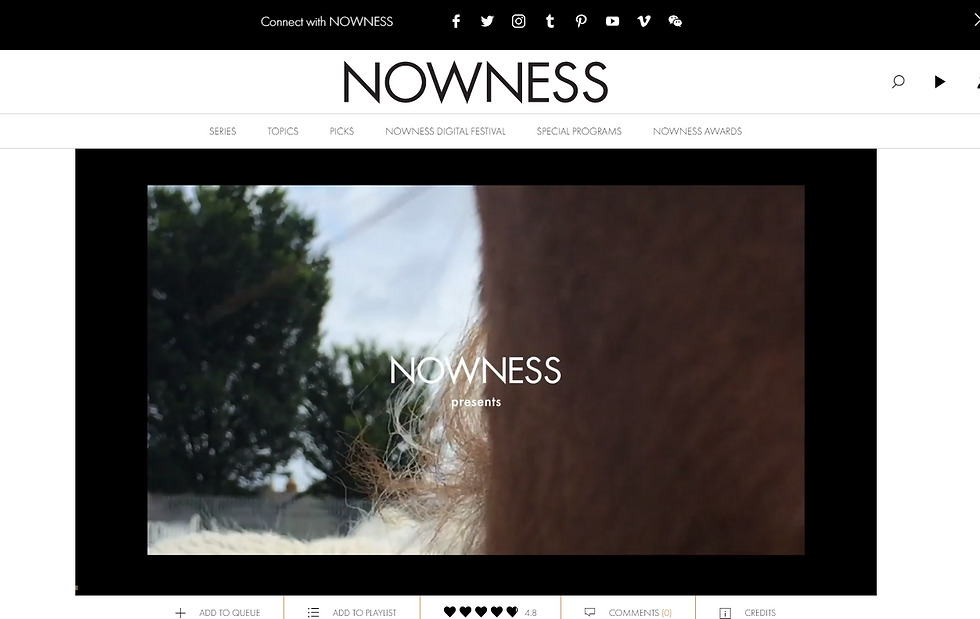
I started the research off by watching documentaries from NOWNESS. This is a website that shares high quality videos of all forms, as long as they are high enough quality to showcase on the website. The first documentary I watched was called "Portrait of a Place: Saoirse" and this documentary was about Dublin's inner-city horsemen's battle against gentrification, to keep their traditional horse stables alive. The documentary follows the lives of 'Dublin Lads' and their battle to keep their traditions alive, of looking after horses and their equestrian filled culture. Within the documentary, these Dublin lads are portrayed as hard men, but from listening to their stories and their love for horses, the audience quickly finds out that these are friendly people. The documentary is very well shot, with lots of close ups, especially of eyes, to show that these people are like everyone else, and are just fighting for justice for their culture. The close ups of eyes is to make the audience look into the characters' souls, as it is said that the eye is the gateway to the soul. The documentary also uses lots of wide shots, to show the gentrification in transition. You can see the horse yards, and in the background you can see building works and construction sites, to show the danger to the audience. There is a constant theme throughout the video, with similar colours and the same pace. There is also parts of the documentaries that allow the footage to do the talking. By this I mean that there is b-roll footage, of the Dublin lads, their families and the horses, mixed in with emotional music, as well as footage of the construction sites. The footage shows what the problem is, and who the problem is affecting, and as the audience it is clear what the documentary is about.
The next documentary I watched was called "Lovesick: Somewhere". This documentary is about a young skateboard couple, who were asked the question "how would you spend your last day on earth"? This documentary is very different to the previous, with this documentary being more about the cinematic side of the production, as well as taking a different approach to the documentary style. There were no interviews within this documentary, as all of the audio was recorded before the shooting took place. The Skater couple recorded audio of what they would do on their last day on earth, and the director, Ariel Danziger, created an aesthetic and visual that linked well with the audio. The couple are huge features within the video, but the characters do not speak one bit, it is all voice over. There is a very different aesthetic to this documentary, with most of the video filmed at twilight hours and the evening to give off the 'end of the world' vibe to the video. The cinematography within this documentary was more daring, and with more unique shot types. This documentary made the audience automatically start thinking about what they would do on their last day on earth, due to the lack of speaking from the characters, and the dreamy footage recorded. This documentary was thought provoking and a completely different style to the previous.
The final documentary I watched was called "Young Masters: Baji Quan". This documentary focuses on traditional Chinese culture, being defined by a new generation of young people. The documentary follows a 23 year old man from Hebei, who is practicing Baji Quan, a traditional Chinese fighting style known for its graceful stillness and sudden movements. The documentary, like the skateboarder documentary is a complete voice over, accompanied by b-roll and footage of the person talking, but the person doesn't visually speak at all. Lots of the footage consists of cinematic shots of the 23 year old man using Baji Quan, and training in nature. The other shots consist of cinematic b-roll of architecture, train rides and dojos where Baji Quan is being taught. There are subtitles of both English and Chinese which adds to the authenticity. There are many persistent styles within this documentary of which are very noticeable, and these add to the quality of the documentary. First of all, there is a lot of symmetrical shots within the documentary. This could involve the subject being directly in the middle of the shot, or using architecture and props to make the shots symmetrical. The symmetrical aesthetic brings along balance, and makes the audience feel like the documentary has been planned in great lengths. The balanced effect also links with the fighting style of Baji Quan, where balance is key. Another noticeable trend is the use of slow motion for large parts of the documentary. The slow motion again links with the fighting style, as the style is known for its graceful stillness. It also fits with the calm aesthetic the visuals give off, as when fighting you need to remain focused and calm. Like the first documentary, there is again use of close ups of the people, to show a connection with the audience, and to create a friendly bond, so the audience like the characters. Out of the three documentaries, this once was my favorite as the story line was the most interesting, and the accompany the story line, the visuals were varied, but all in the same style, as well as the visuals being aesthetically pleasing, due to the amount of thought that had gone into the shots, with great use of symmetry and slow motion, as well as the focus on depth.
There was lots that I learnt from all three documentaries, such as the importance of maintaining a constant themes throughout the videos. These themes can include the theme of content, the theme of shooting/visual style and the same editing theme throughout the video. For example, in the Dublin documentary, there was a range of shots, from close ups, to mid range, and in the shots, the subject was the main focus, and this style was kept throughout. This documentary also used the mid-shot to introduce new characters, showing them with their horse, and construction in the background, to bring across the recurring theme of gentrification ruining these peoples culture. Within the skateboarder couples documentary, the documentary was filmed in the evening, so that the sky had orange and purple colours in it, as well as a LUT of which might have been used to make these colours pop out even more. This was to maintain a dreamy visual. This visual worked, because the question was about the end of the world, and this is a fictional question, so the dream aesthetic also links with a nuclear sky aesthetic of the world ending. In the last documentary, the styles and themes that were reoccurring were the use of slow motion and symmetry. These two themes went well with this documentary, as they link with the them of Baji Quan. This fighting style is about patience and graceful stillness, and so the slow motions makes the audience remain calm, and the symmetry shows the immense attention to detail, as well as perfection. I will definitely be choosing a couple of themes to base my documentary around, and will ensure these are the focus of the documentary. Choosing base themes that re-occur throughout the documentary will allow myself to create a recognizable style that I can use within most of my projects.
Another thing I learned is that the subject and purpose of the documentary has to be easily recognizable to the audience, especially with a short documentary. Having a focus to the documentary will ensure that content is appropriate to the theme, as well as fitting in with the genre and focus. "A well edited film allows for a more unprejudiced approach. Each person or subject that is identified brings a unique focus to the film and requires a voice that is impartially heard". This is a quote from Stewart Dunlop, on the web page "What makes a good Documentary Film"? Found here: https://www.documentarytube.com/articles/what-makes-a-good-documentary-film#:~:text=The%20essential%20element%20of%20a,emotional%20tie%20to%20the%20film.&text=A%20well%20edited%20film%20allows,voice%20that%20is%20impartially%20heard. This quote shows that good documentaries maintain neutral perspectives, and should not try and sway the audience one way or another, but documentaries should be thought provoking, to allow the audience to discover their own views on the matter, after the information has been layed out in front of them. With this in mind, my documentary will aim to educate over swaying the audience.
The main take-aways from the NOWNESS documentaries is to create an ongoing theme for the documentary in the style of narration, filming, editing and content. This keeps the audience interested, as well as intrigued to find out more. There are many different styles for documentary, such as narration over the top, cinematic b-roll both related and not related to the audio, interviews with subjects, the film maker talking to the camera and much more. I think I will aim to choose 2 of these styles, and maintain them both throughout my documentary. This will allow myself to test out 2 styles, as well as keeping the content entertaining and fresh. I will also ensure that I follow basic film rules, such as symmetry, line of thirds, different shot types and distances and much more, to ensure the cinematic aspects of the documentaries are as good as they can be.


Comments